Vabilo na predavanje o raziskavah geotermalne energije v Kanadi
Geološki zavod Slovenije (GeoZS), Društvo hidrogeologov SKIAH in Slovensko geološko društvo vas vabijo na predavanje gostujoče kanadske doktorske študentke Fione Chapman iz Institut national de la recherche scientifique (INRS) v Quebecu.
Fiona je trenutno na GeoZS na trimesečnem gostovanju, ki ga financira RSF projekt Using optical fibres to evaluate subsurface heat and flow transfer effects – Geo-OPT, in s katerim prenaša svoje izkušnje z uporabo optičnih vlaken za raziskave geotermalnega potenciala v Slovenijo.
Fiona Chapman bo izvedla predavanje v angleškem jeziku z naslovom Geothermal Energy in Canada: geological provinces, local development, and field techniques for resource assessment
v ČETRTEK, 5. junija 2025 ob 15. uri na NTF, predavalnica 209, Aškerčeva cesta 12, Ljubljana.
Pooblaščeni in nadzorni inženirji za udeležbo na strokovnem usposabljanju prejmejo 1 kreditno točko iz izbirnih vsebin skladno s Splošnim aktom o stalnem poklicnem usposabljanju pooblaščenih inženirjev.
V nadaljevanju najdete opis predavateljice in povzetek predavanja v angleščini.
Fiona Chapman is a PhD student at the Institut national de la recherche scientifique (INRS) in Quebec City, Canada. She is currently a visiting researcher at the Geological Survey of Slovenia, where she is sharing her expertise on the use of fibre-optic cables in thermal response testing. Beyond fibre-optics, Fiona’s research focuses on the challenges and opportunities of integrating geothermal energy into remote communities in northern Canada. Her three-month research stay in Slovenia is funded through the DFP project Geo-OPT – Using optical fibres to evaluate subsurface heat and flow transfer effects, which is co-funded by the Slovenian Research and Innovation Agency within the framework of DFP (Developmental funding pillar).
Title: Geothermal Energy in Canada: geological provinces, local development, and field techniques for resource assessment.
Canada’s heating demands are high and geothermal energy presents a promising option for both direct and indirect heating applications. However, the variation in regional geology influences the suitability of different geothermal technologies. This presentation will begin with an overview of Canadian geology, as applicable to geothermal energy. The influence of geological context on geothermal feasibility and technology is explored through examples ranging from ground-source heat pumps in urban centres to deep, community-led electricity projects.
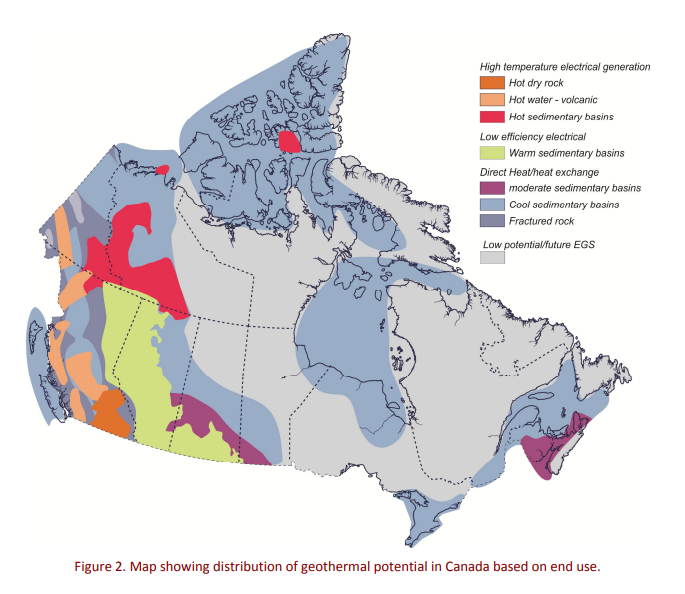
The focus then shifts to a regional geothermal assessment for southwestern Yukon. This work is completed in collaboration with the Yukon Geological Survey and Kluane First Nation. An overview of reservoir characterization will be provided with an emphasis on the distributed temperature sensing in thermal response tests using fibre-optics. Distributed temperature sensing enhances resolution of subsurface thermal properties which contributes to more accurate geothermal potential assessments. This method is currently applied locally to get high-resolution thermal properties across different lithologies in Slovenia.

Next year, Canada will be hosting the World Geothermal Congress 2026 at Calgary (https://worldgeothermal.org/wgc2026 ).